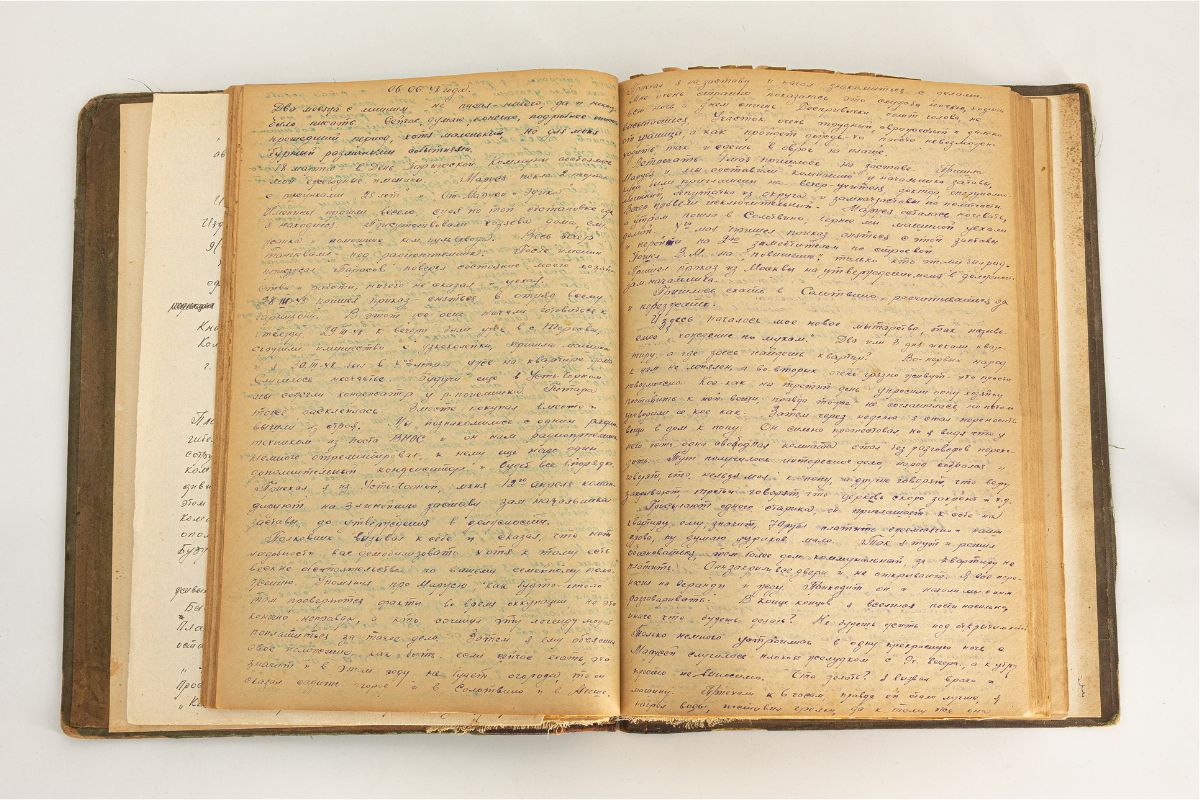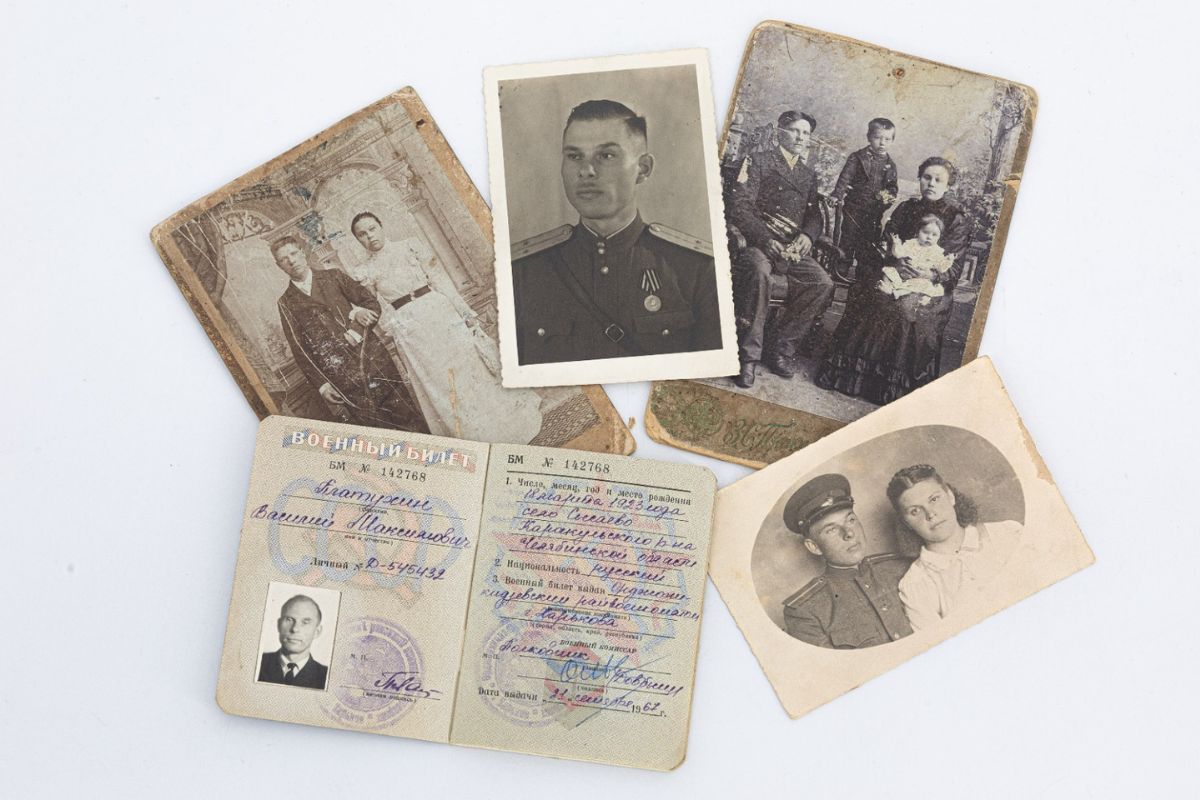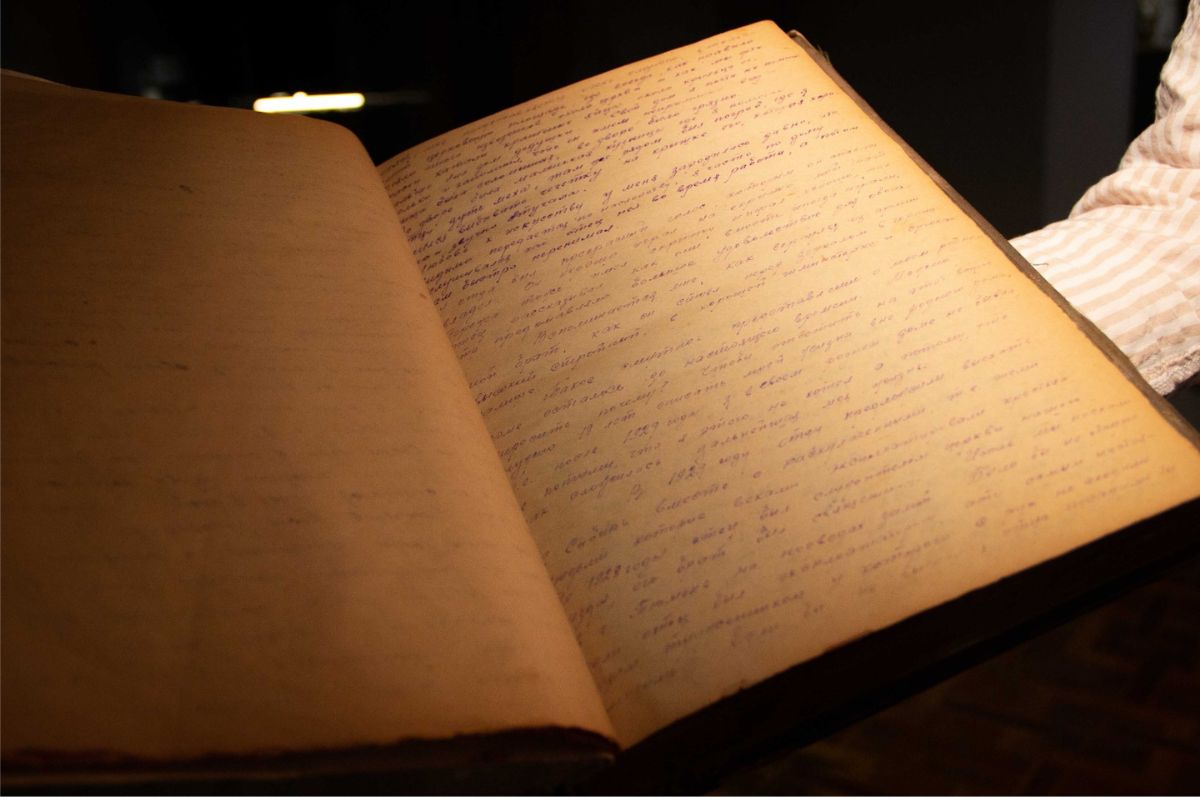


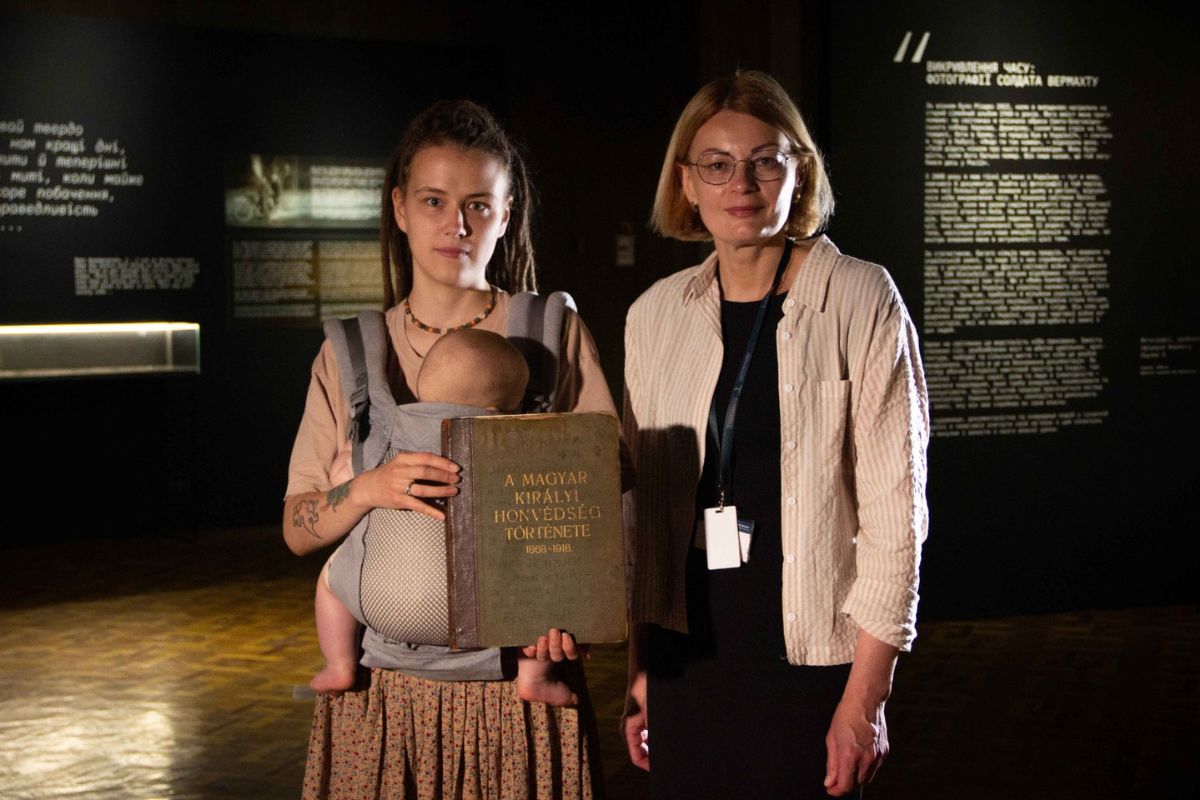
The Museum collection has been enriched with new items from the Second World War period. Mariia Kabanova donated part of her family archive to the Museum, including the diary of her great-grandfather, Vasyl Platukhin.
The impetus for this was a student research project on her own family history. Studying her family’s past in the context of wars, the Holodomor, repressions, and language policy, Mariia traced eight generations of her ancestors. Most of them came from Slobozhanshchyna, and their lives proved to be closely intertwined with the dramatic events of the twentieth century. Mariia is grateful that she managed to complete this work before russia’s full-scale invasion, as most of her ancestors came from villages that later fell under russian occupation and suffered greatly, many of them in the Chuhuiv district.
The diary of her great-grandfather holds a special place in this research. The son of a repressed priest, Vasyl Platukhin served in the Soviet army and, after the end of the Second World War, took part in operations against the liberation movement in the western Ukrainian lands.
“You feel as though you are reading a novel, but one about your own family. At times, it is very difficult to acknowledge that we are often descendants of both the repressed and those who destroyed Ukrainians,” says Mariia. “Every year on 9 May, he would cover himself in medals and go to schools to speak about the war, yet it turns out that his only wartime experience consisted of raids against Ukrainian insurgents. Not a single day of fighting against Germany. What he spoke about in schools remains a mystery to me…”
The diary also preserves testimony about the fate of the family of his wife, Mariia, from Cherkasy Oblast, whose relatives were subjected to dekulakization and repression. Vasyl Platukhin deeply loved his Ukrainian wife and admired the Ukrainian songs she performed, yet he forbade his children from speaking the “nightingale language” — Ukrainian — and from being raised in Ukrainian traditions. He reflects on this as well in the pages of the diary, which, after detailed study, will become part of the War Museum’s epistolary collection.
Such personal testimonies allow us to see history not only through major events, but also through human lives. At a time when Ukraine is once again resisting russian aggression, these documents help us better understand how the Soviet system shaped people’s worldviews, creating a complex legacy with which society continues to grapple today.