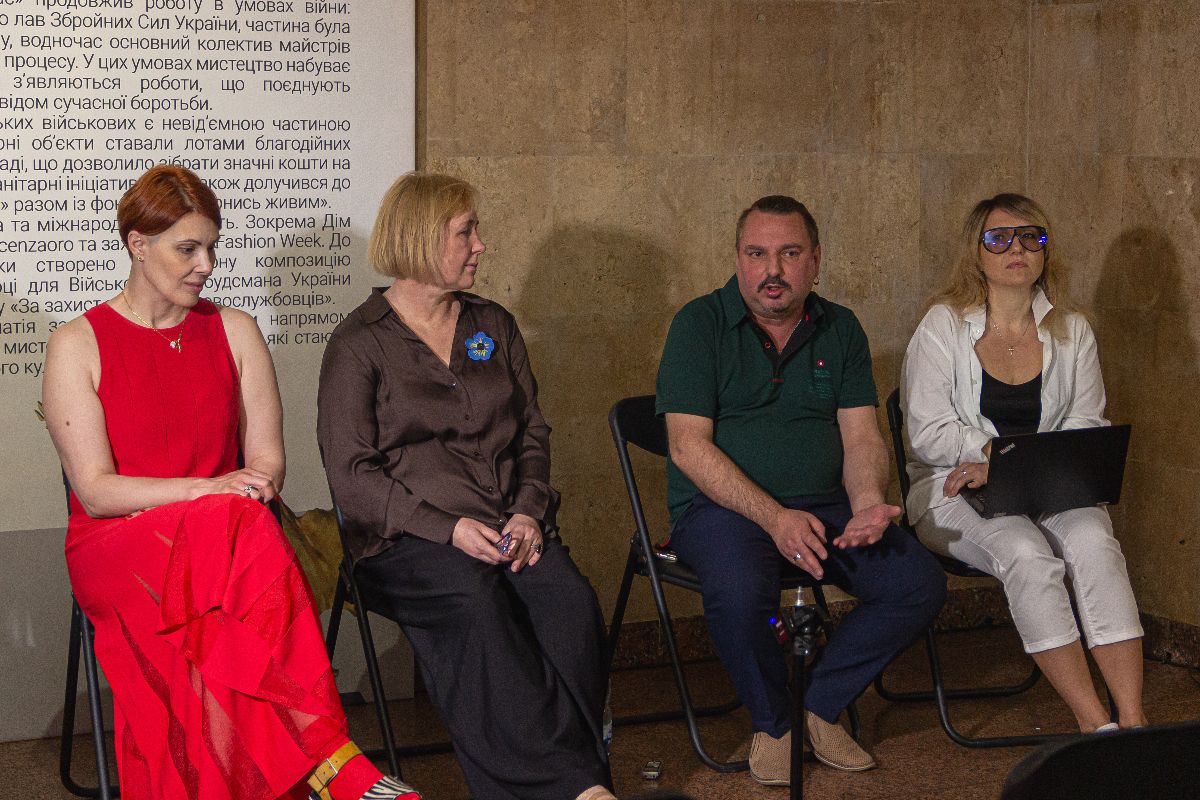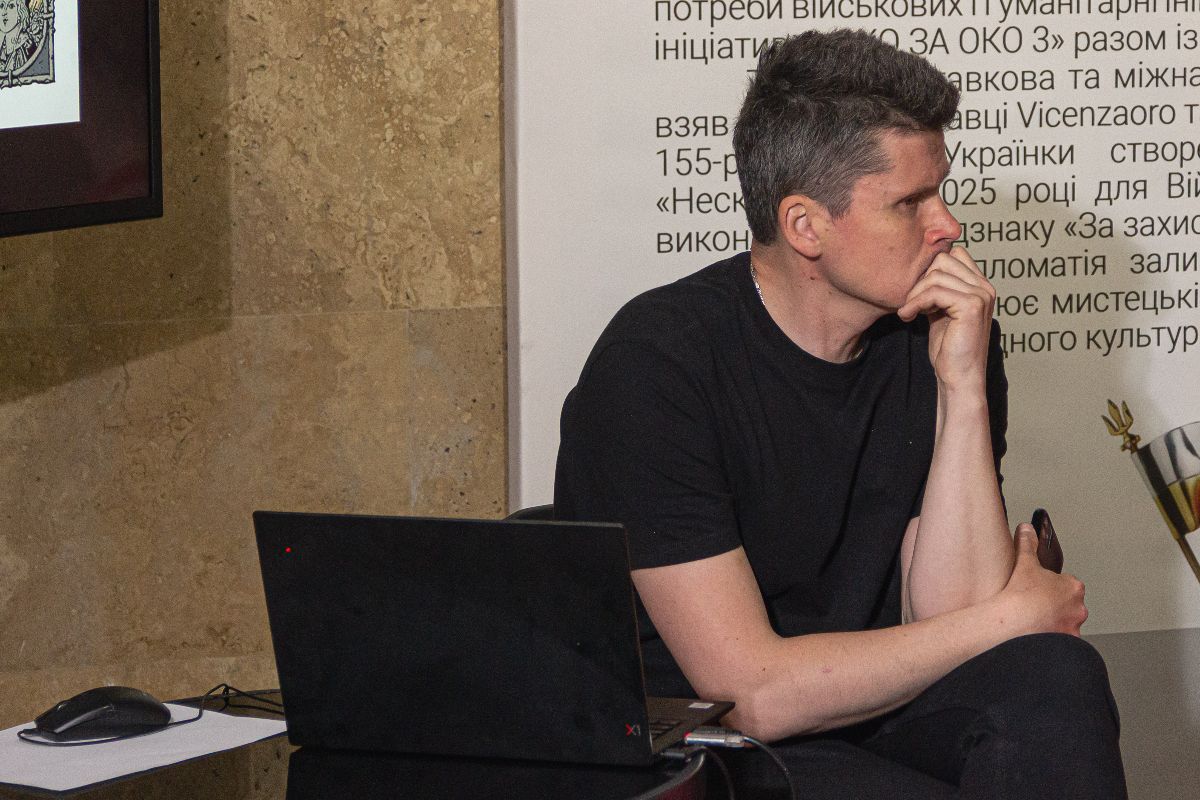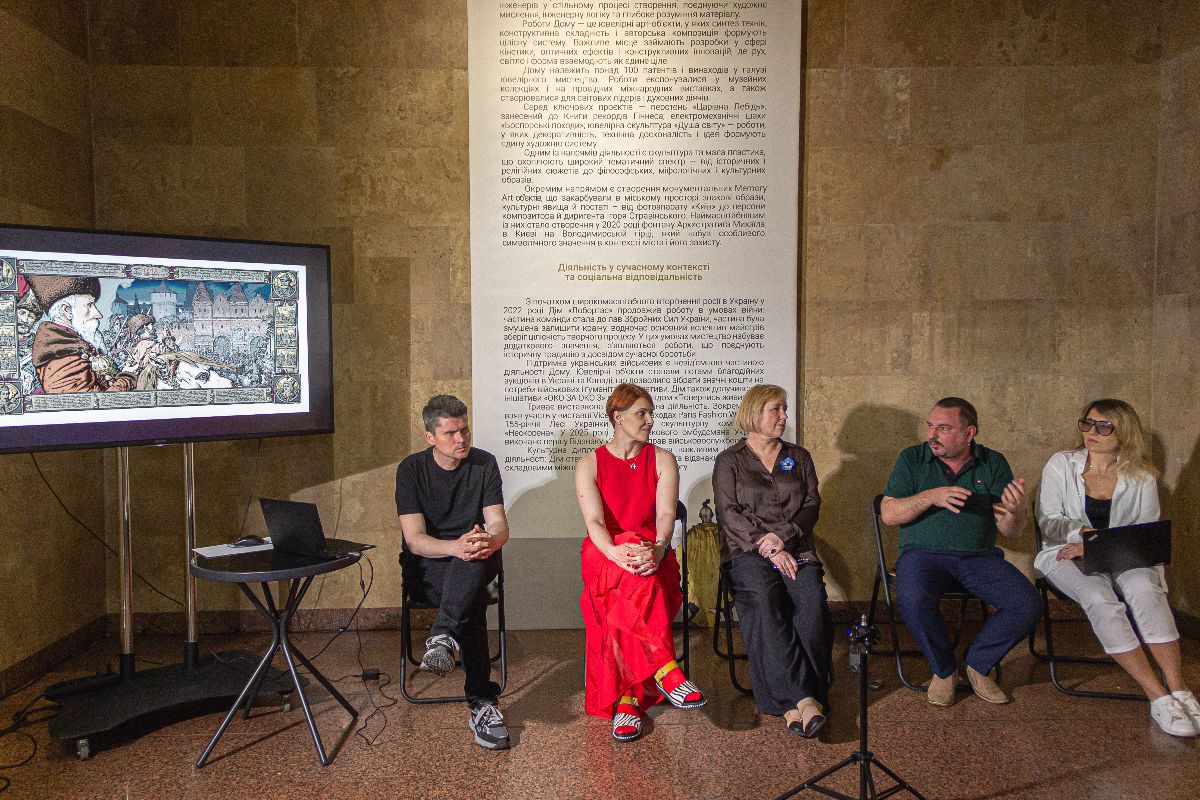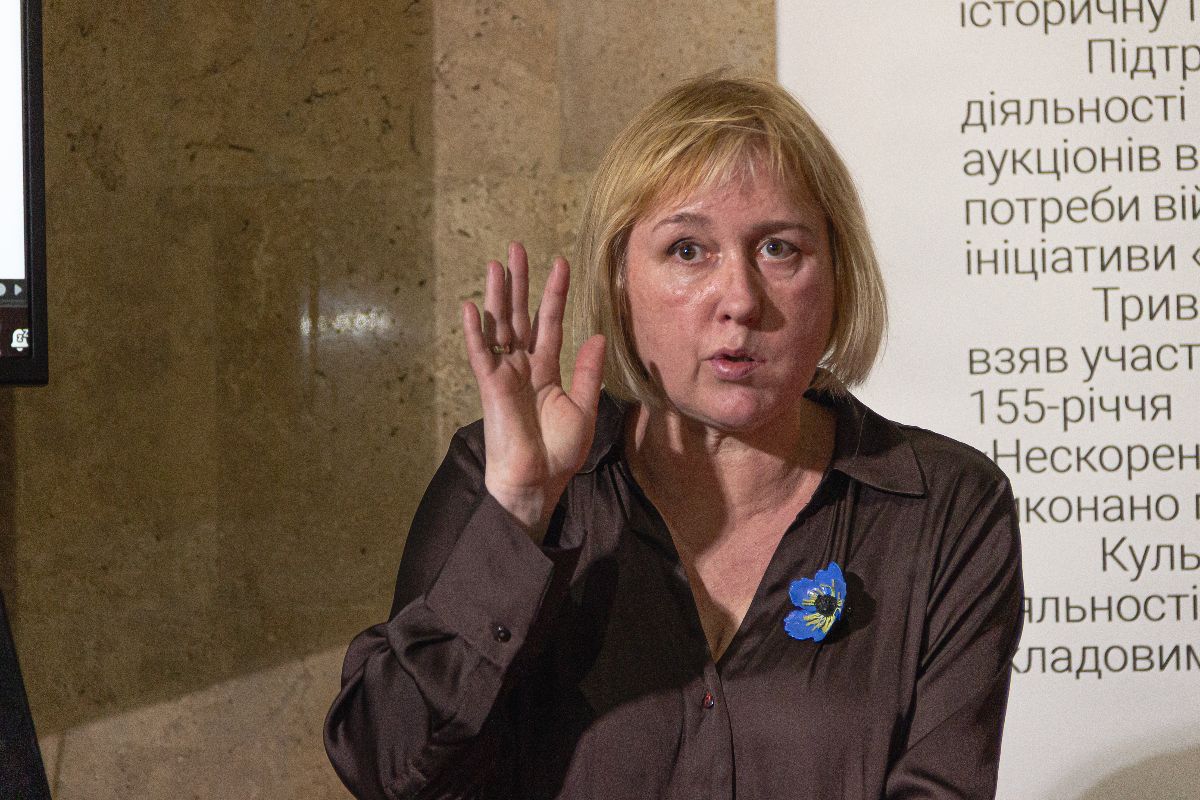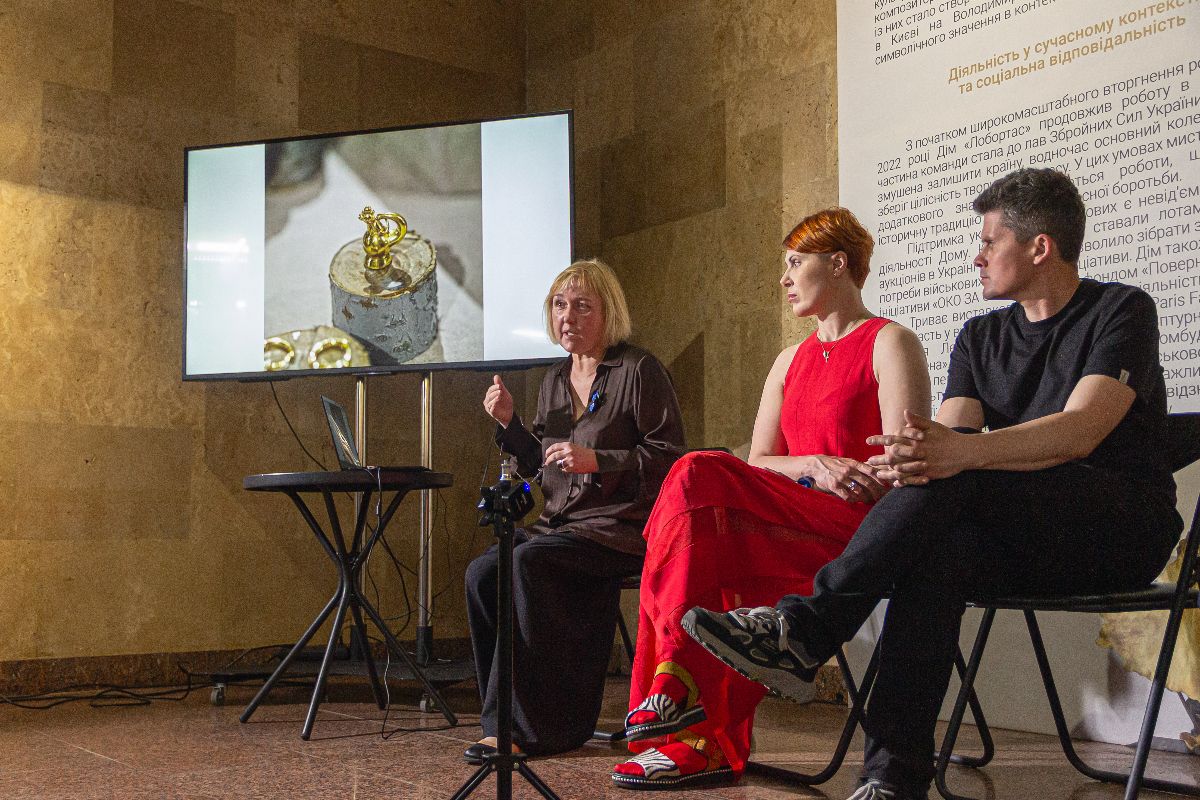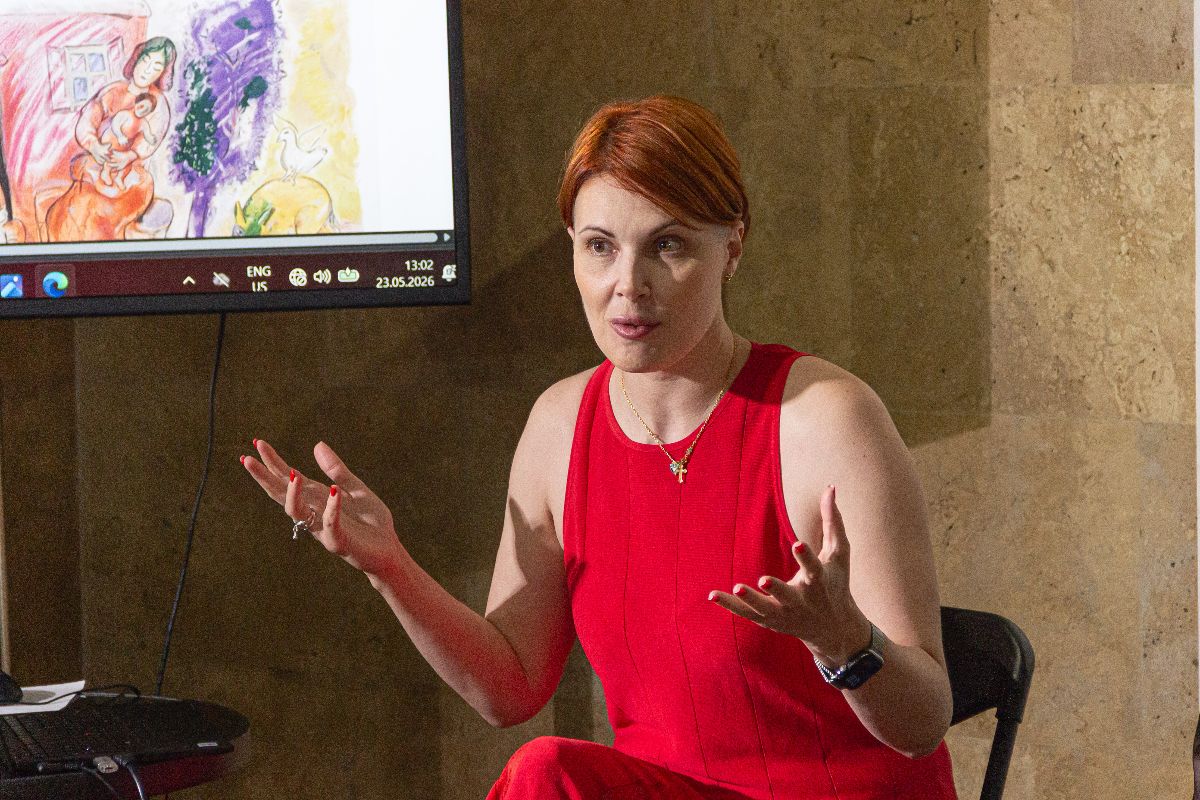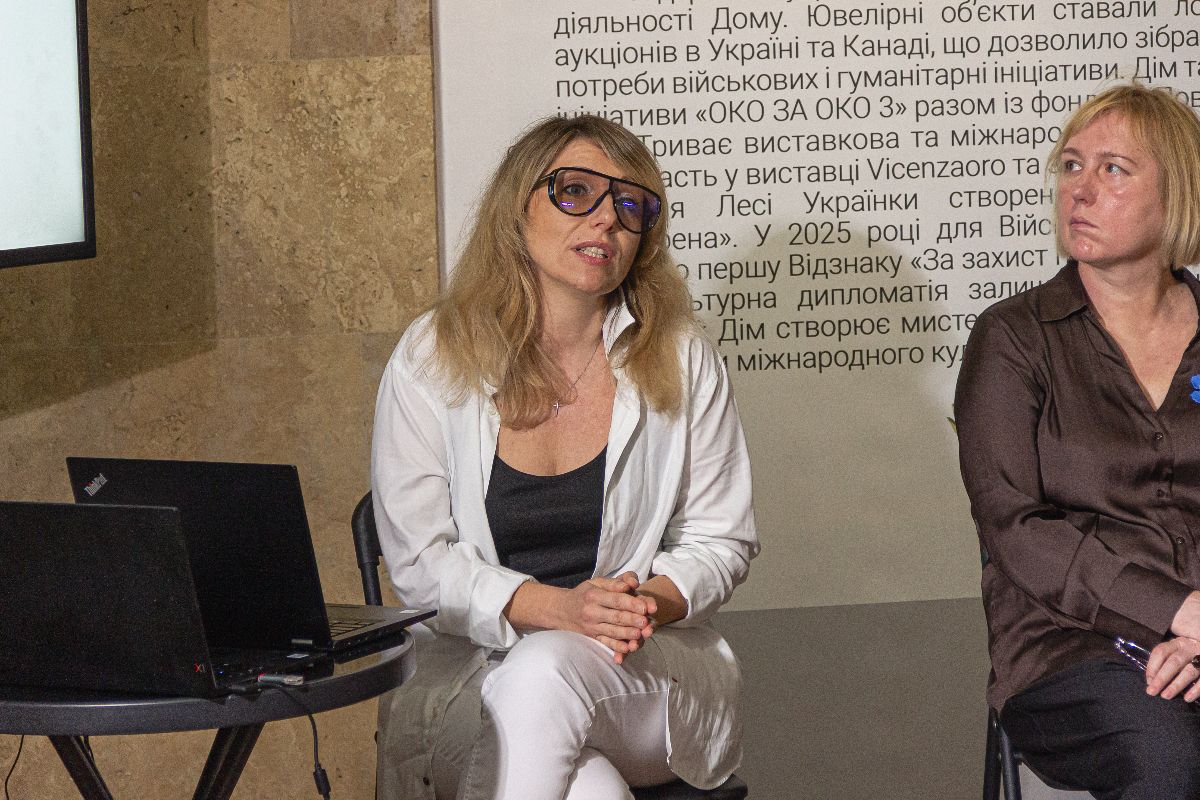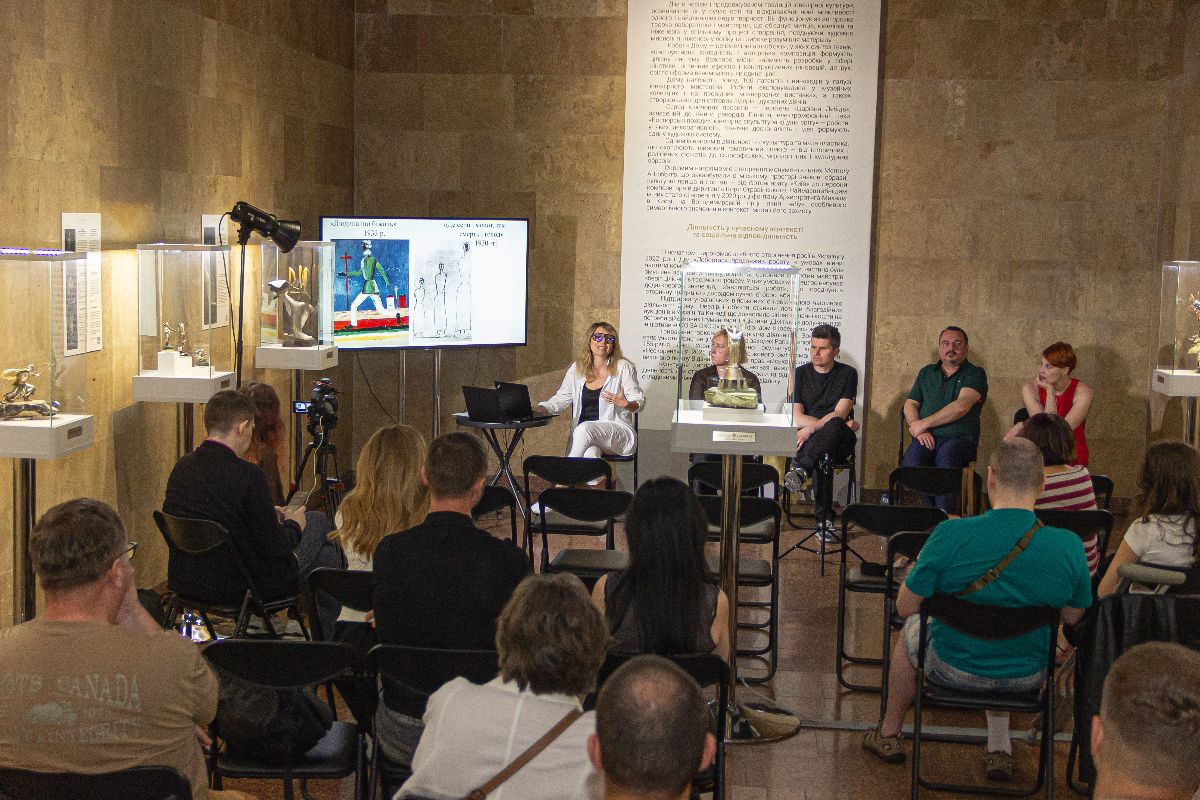


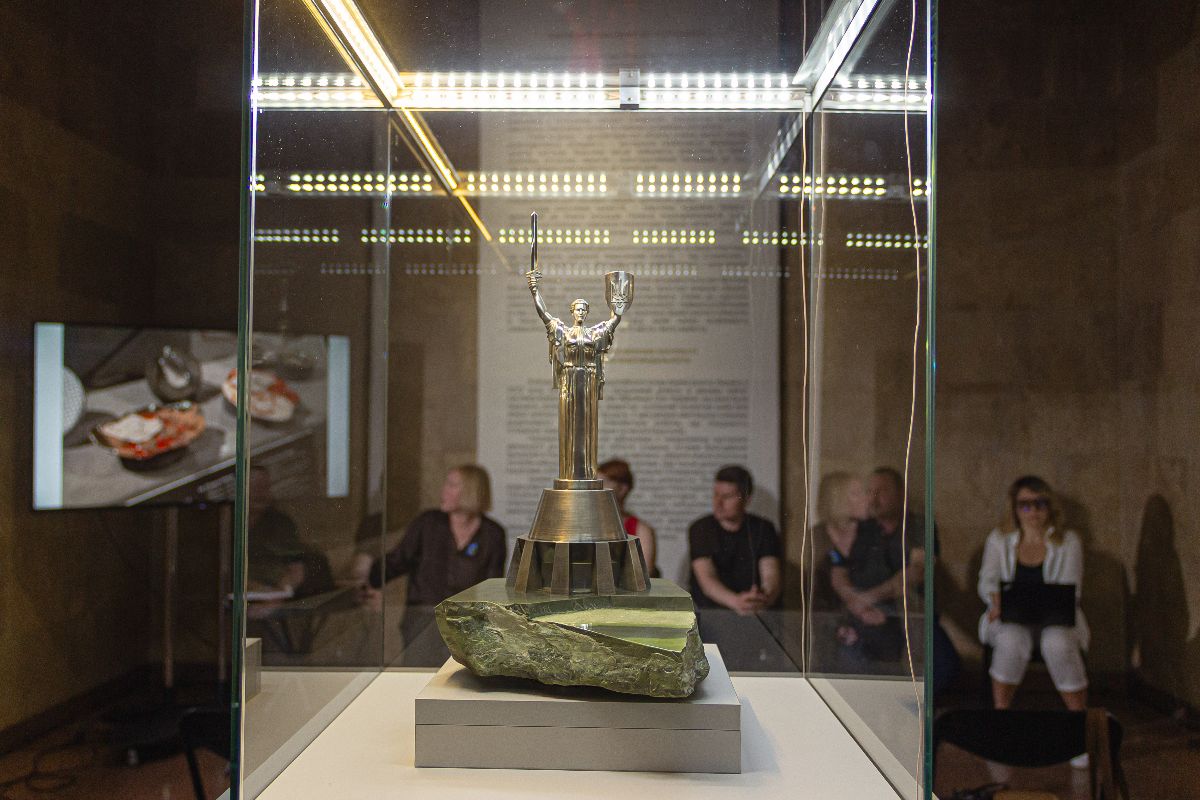
The “Values” exhibition at the War Museum concluded with a vibrant finissage. As part of the closing program, the Museum hosted an open discussion titled “Values. Continuity of History”. The exhibition featured artifacts from the Lobortas Classic Jewelry House. The discussion was moderated by Anton Lohov, co-curator of the exhibition and an artist at the War Museum.
At the beginning of the discussion, Roman Kabachii, head of a sector at the War Museum, gave a historical overview of how works of art have contributed to the formation of the Ukrainian people’s collective memory. Referring to the artifacts presented in the “Values” exhibition, the historian highlighted the skillful choice of symbols used by the authors of the series to represent Ukrainian values. These include the trident, a Cossack with a musket, the map of Ukraine, Cossack Mamai, the Cossack-kharakternyk (a warrior-mystic from Ukrainian folklore), the image of the “Triumphant One” inspired by Hetman Petro Konashevych-Sahaidachnyi, and the Motherland Monument, whose creation art historians associate with the influence of the Oranta image. “When we see the trident or the outline of the map of Ukraine used in public space today, it does not mean that these symbols have always been perceived as something self-evident,” Kabachii said.
In her presentation, Iryna Udovychenko, senior researcher at the Treasury of the National Museum of the History of Ukraine, presented jewelry works created during the russian-Ukrainian War and previously displayed at the Treasury. She emphasized the powerful anger toward the enemy expressed in these works, some of which convey an extremely harsh, yet no less truthful, narrative.
Natalia Sydorenko, art curator, founder of the Bifurcation Creative Atelier, and head of communications for the “Values” exhibition, suggested that during this war, Ukraine is undergoing an “initiation through war”, revealing itself to the civilized world as a country with its own clear and deeply rooted values. She also emphasized that the Ukrainian political nation was shaped by diverse cultures, and that the traditions of tolerance rooted in the period of the First Liberation Struggle and the Ukrainian People’s Republic continue to resonate today.
Lesia Turchak, art historian and associate professor at Kyiv National University of Culture and Arts, addressed the important issue of restoring prominent visual artists to the Ukrainian cultural narrative. She explored this theme through the examples of the great masters Illia Ripyn, Kazimir Malevich, and Arkhip Kuindzhi. She convincingly demonstrated both the influence of Ukrainian culture on their work and the presence of Ukrainian themes in their art. Ms. Turchak also noted which museums around the world already present these artists as Ukrainian.
At the end of the meeting, Anton Lohov summarized the discussion, noting that contemporary artists also embody the continuity of the Ukrainian historical process. In particular, he mentioned poster artist and Shevchenko Prize laureate Andrii Yermolenko, who has become a friend of the War Museum and will participate in one of its upcoming exhibition projects.