


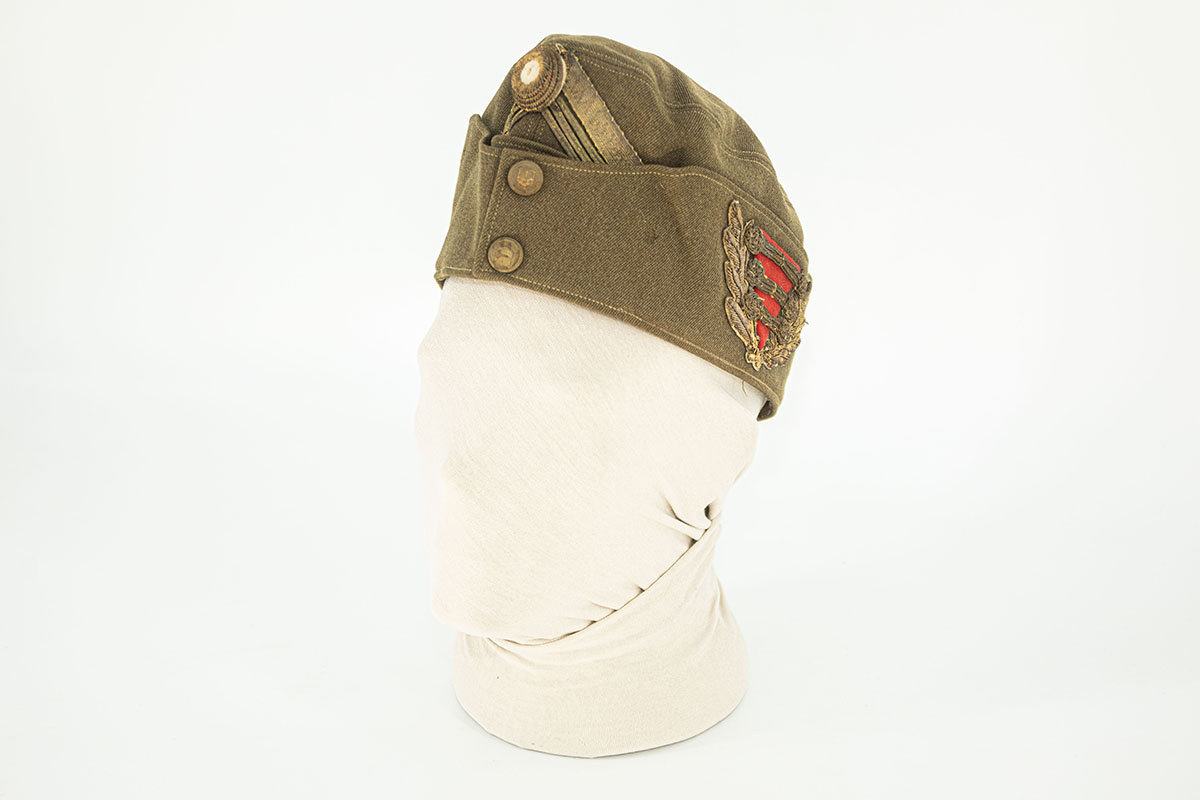
On February 23, 1945, the "Exhibition of Trophy Weapons and Equipment in Kyiv" opened, which laid the foundation for the collection of the War Museum. Among its exhibits was a side cap belonging to the uniform of a Colonel-General of the Royal Hungarian Army. The Bocskai-sapka (Bocskai) is a field cap of the Royal Hungarian Army, approved in 1920 by Regent Miklós Horthy. The silhouette of the headwear, with its characteristic V-shaped cut, imitates traditional 17th-century cloth caps. The headwear is named after István Bocskai, Prince of Transylvania and leader of the anti-Habsburg uprising (1604–1606), during which similar caps were worn by noblemen and haiduks. During World War II, the "Bocskai" became the standard headwear for the Hungarian military: enlisted men wore simple cloth versions, while officers and generals wore versions decorated with gold or silver embroidery and rosette cockades. After 1945, these caps were massively confiscated, altered, or destroyed as "monarchical." Because of this, original specimens with a fully preserved emblem are extremely rare today.
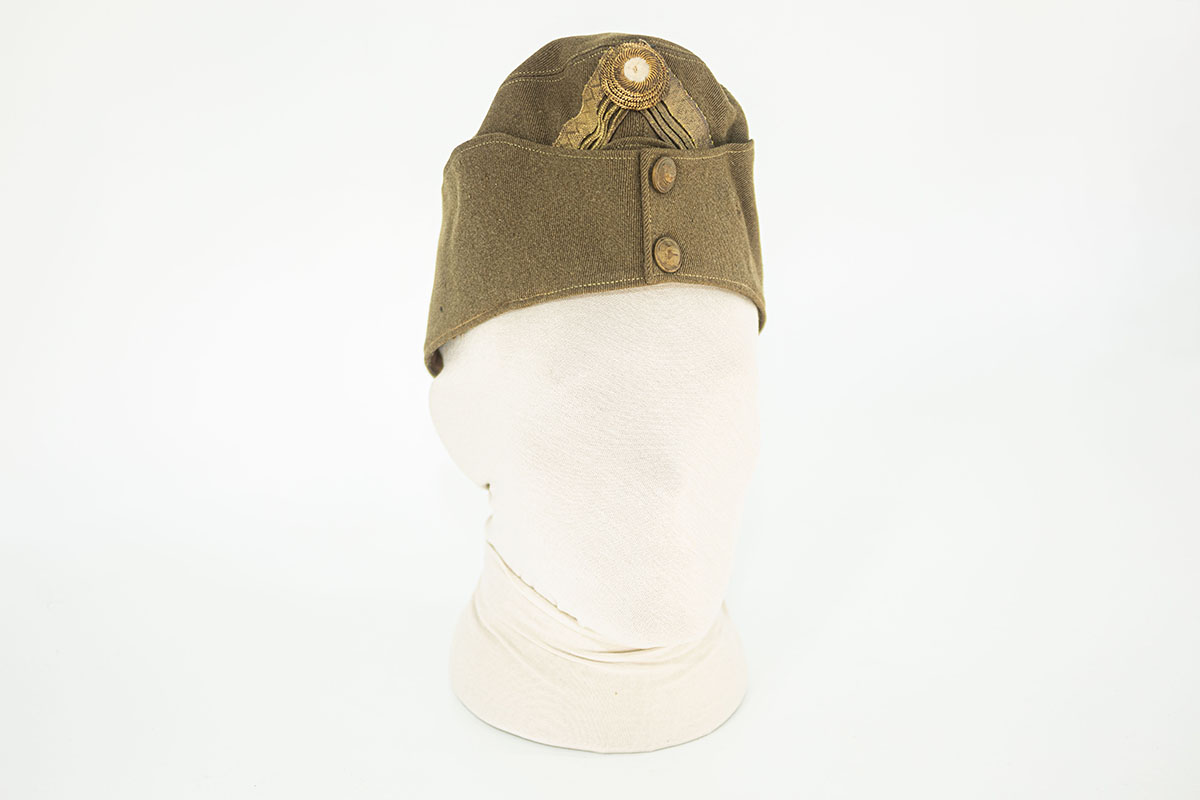
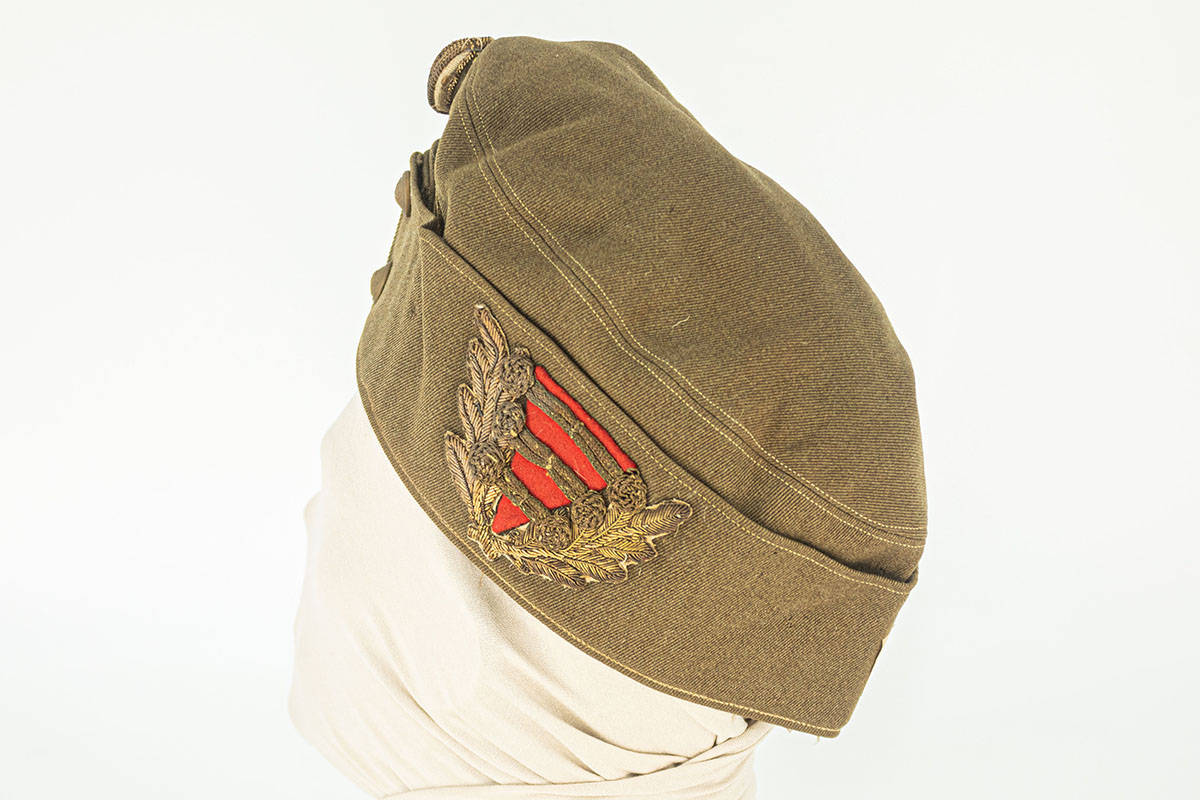
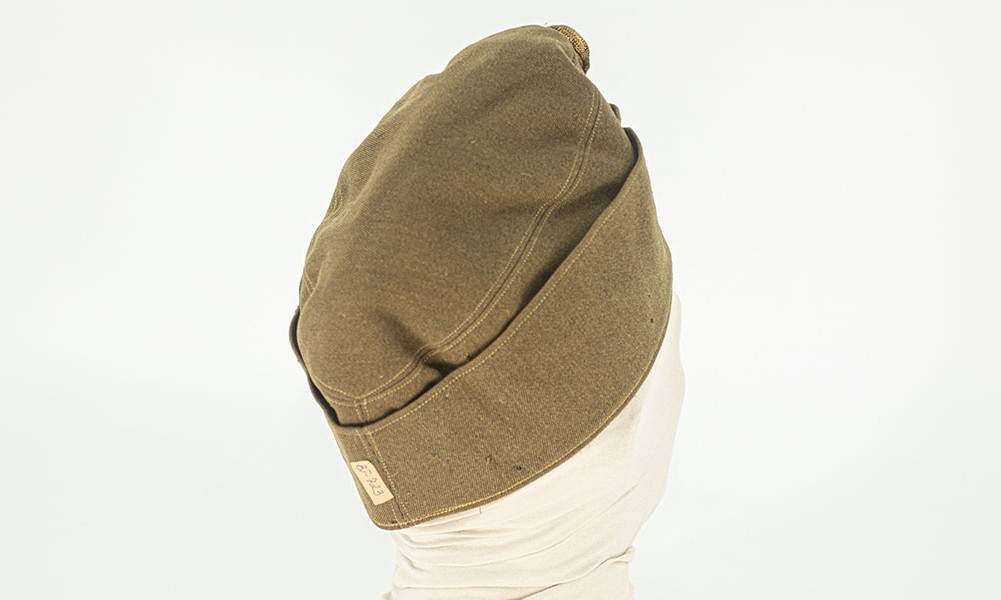
Made of green wool fabric on a green lining, the edge is trimmed with yellow leather. On the front are two metal buttons (depicting the Crown of Saint Stephen), and above them is a patch made of gold-threaded braid and cord, and a cockade. The rank insignia – a red shield framed by leaves – indicates belonging to the general staff. The gold-cord cockade and leather lining inside the cap indicate belonging to the higher officer corps. A wide braid with a jagged line and three thin pipings signify the rank of colonel-general. Almost no two identical caps existed, as the embroidery was often done by hand or in a semi-manual way, causing the emblems to differ slightly from one another.